

Sent Downriver
An Ohio River story.

It’s 2012, and I am kneeling beside her coffee table, setting up the tripod and camera. I am here because of the Ohio River Flood of 1937. Seventy-five years late.
By now, the stories are well-worn, but I have driven from North Carolina to Meigs County, Ohio, with my camera gear, crew, and notepad to hear them. And to hear Bessie tell hers.
I take in the room. Her home looks like so many others I’ve known in the Rust Belt. I grew up here. Worker cottages. Double houses. Two-story dwellings with front gables, built close to one another when industry was booming. Her living room walls are paneled in dark wood. Pink curtains hang from the windows. Clear plastic wrapping covers the lampshade on the side table.
From behind the camera, I adjust the settings and angle to frame Bessie’s face.
“Are you comfortable there on the couch?” I ask. “Enough to sit a while? I’d like to ask a few questions.”
“Yes, I’m fine.”
She shifts in her seat but never takes her eyes off the lens. I gather she might be nervous. Or maybe she simply isn’t used to strange company in her living room. The house feels familiar, set in its ways, tidy but lived in, privy only to her cats and kin, maybe a close neighbor. Not lights. Not a camera. Not me.
I am in town leading the Ohio River Stories Project, a time capsule for the region and historical society. For two days, I interview community members who either remember the flood or have stories handed down to them. With help from the Arts Council and a few local families, we have placed a notice in the local paper, calling for townfolk with a tale to tell.
Bessie asks for a private visit. I gladly oblige.
“You ready?” I ask.
She nods and smooths her short white hair.
“Just talk to me. Ignore the camera.”
I press record.
She smiles.
Here’s the thing. Bessie’s story is about her parents’ meeting in the winter of 1937. It is a fated romance worthy of a Hollywood film, and I am fully prepared to capture a sweeping recounting. I imagine she has heard it her entire life. I imagine she has told it to her own family, polishing it with time.
What I don’t expect is how quickly she tells it.
You really know something if you can say it simply.
What might take Hollywood two hours, Bessie delivers in seven sentences. And she lands the ending with a grin so triumphant I nearly ruin the audio file laughing behind the camera.
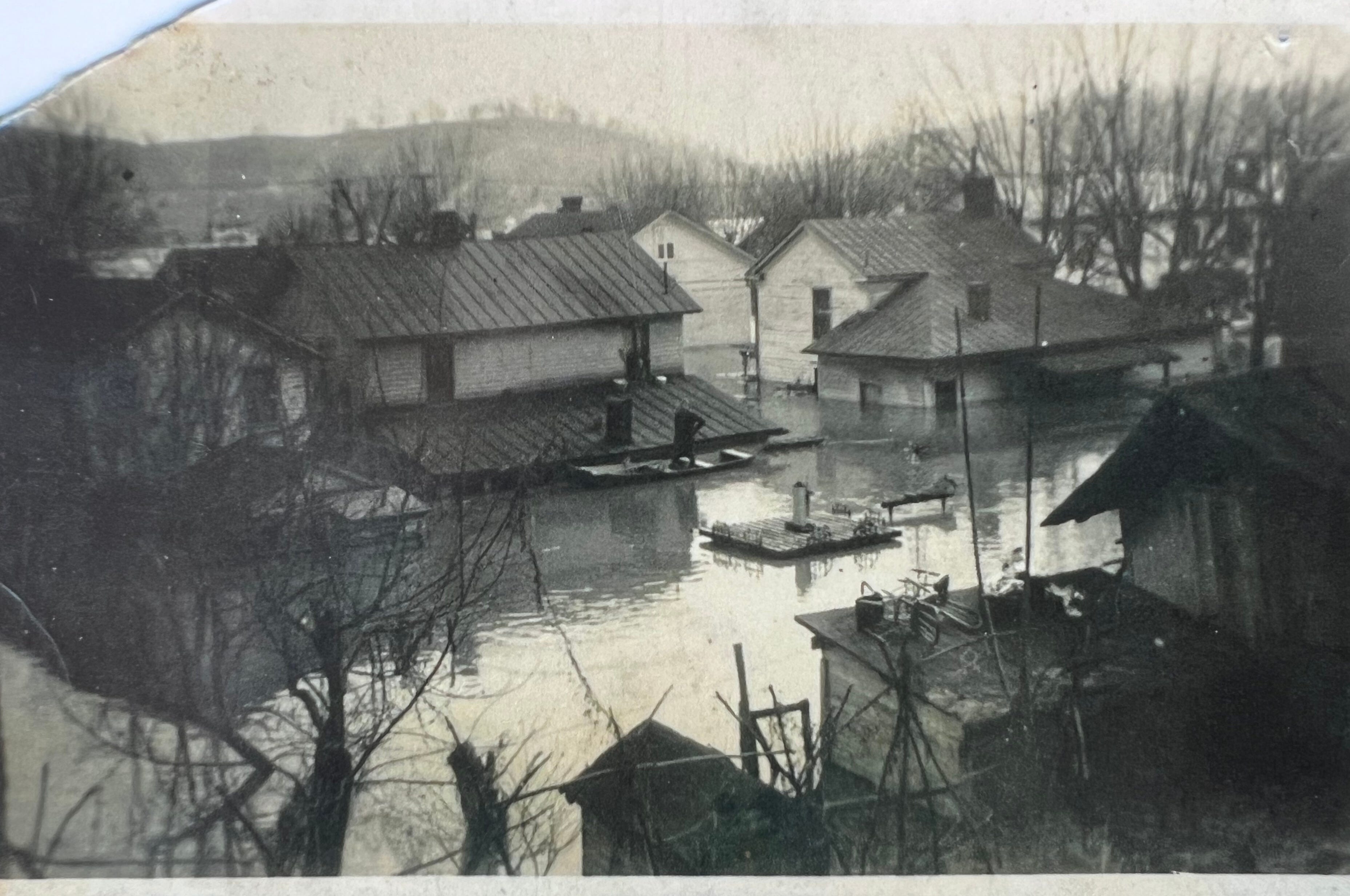
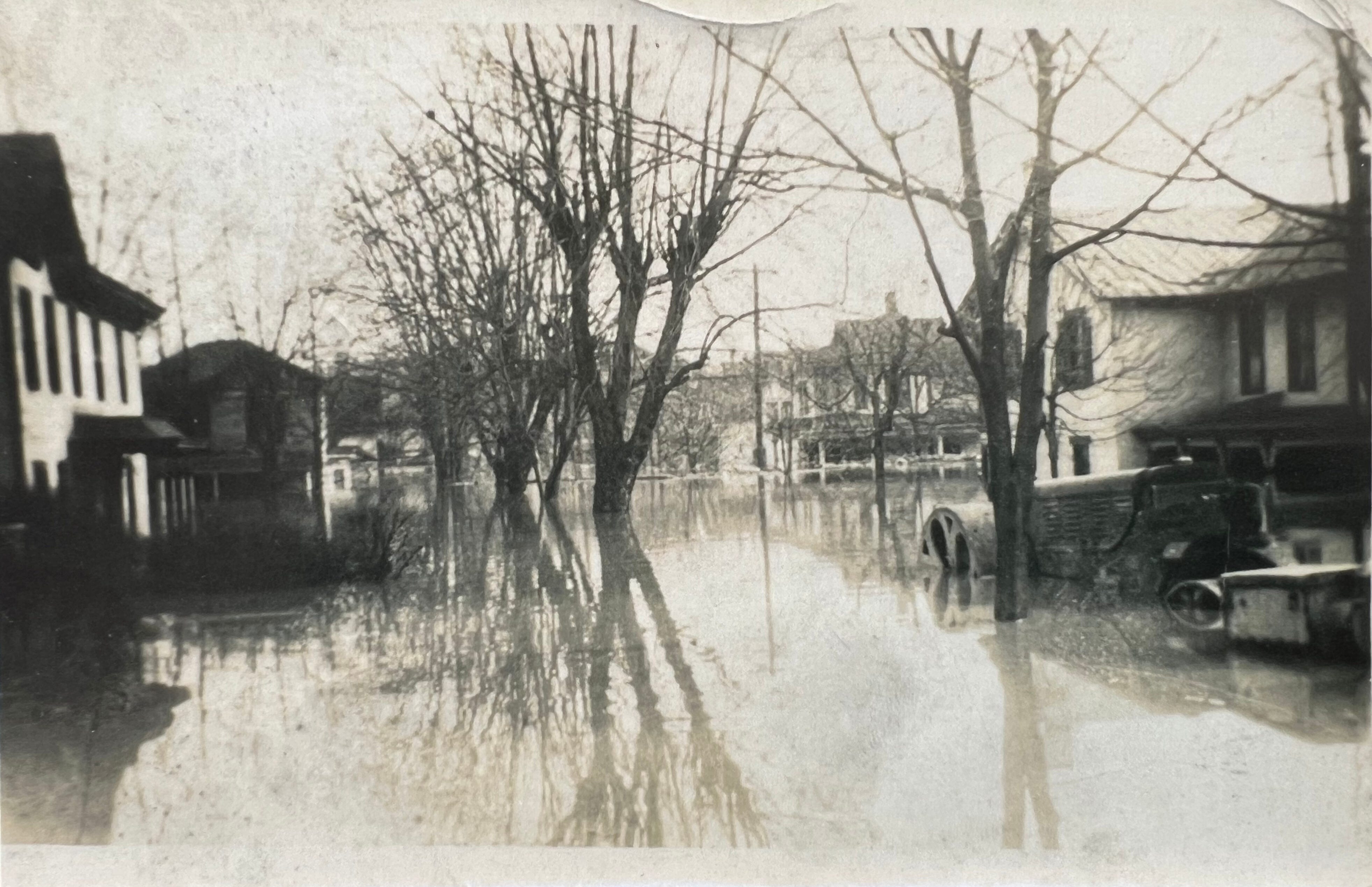
The 1937 Ohio River flood was unprecedented. It came in the depths of the Great Depression. Excessive rainfall pushed the river beyond its banks, taking 385 lives and leaving one million people homeless. Property losses reached $500 million at the time, more than $11 billion in today’s numbers. The flood submerged towns from Pittsburgh, Pennsylvania, to Cairo, Illinois. The Ohio River water levels in Meigs County, her home, and in Gallia County, mine, still hold the record to this day.
And in the middle of that devastation, this happened.
Bessie’s story, in her words:
“When the ’37 flood was, my dad lived in Pomeroy, Ohio. And he put his address in a bottle and throwed it in the river. My mom was from South Shore, Kentucky. Her dad found the bottle and gave it to mom. And her and dad started to correspond. They married in November of 1937. I was born in July 1938.”
Can you see her grin? I still can.
Bessie passed away in December 2016.
I think of her often. Of the river swollen beyond its banks. Of a man standing at the edge of it anyway, writing down his name and trusting the current.
For me, it’s a sweet reminder that love can be found even when all feels lost. And it’s profound proof that hope floats.
Wonderful story. Love the pics as well. Brought back memories filed away long ago. 😊
You’re such a good writer, Katie. I hope you will either compile your stories into a book and/or write a book!